Morning routines, mealtimes, and bedtime transitions are the building blocks of family life, yet they often present some of the most significant challenges for children with autism. When a child struggles to brush their teeth in their own bathroom or sit at the kitchen table, a clinical setting miles away might not offer the immediate solutions a family needs.
In this blog, we will explore how localized, homeABA therapy in Denver in Denver allows children to learn essential life skills in the exact environment where they will use them. Readers will gain insight into how professional support can turn daily household friction into opportunities for independence and growth.
Bridging the Gap: The Mechanics of Natural Environment Teaching
To master a daily routine, a child must be able to perform tasks amidst the natural distractions and specific layouts of their own home. Traditional clinical models often struggle with "generalization," but a home-centric approach solves this by making the living room the primary classroom.
Why "Generalization" Happens Faster at Home
Children with autism often find it hard to take a skill they learned in a quiet clinic and use it in a loud house. This gap is what therapists call a failure to generalize. In-home therapy skips this middle step entirely. Your child learns to put on their shoes while sitting on your actual rug.
They practice washing their hands at your specific sink. This direct approach removes the need for a translation phase. The brain builds a direct link between the task and the physical space where it happens.
Using your own household items provides specific cues that a clinic cannot replicate. Your child gets used to the weight of their own toothbrush. They learn the exact height of the kitchen chair. These small details act as anchors for learning.
Transforming High-Stress Routines into Success
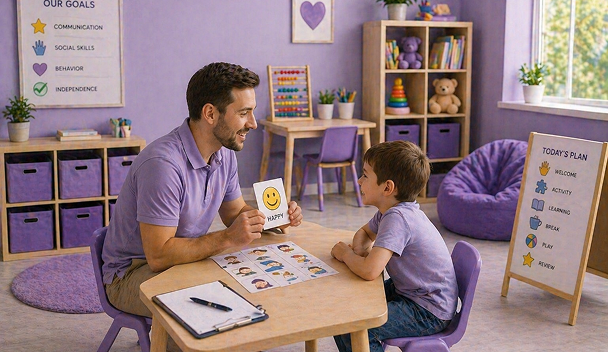
The morning rush often sets the tone for the entire day. We use visual schedules to turn a chaotic morning into a series of predictable steps. Your child looks at a picture of a shirt, then puts it on. They look at a picture of a bowl, then eat their cereal.
Over time, we fade these prompts away. The goal is for the child to follow the routine on their own. This reduces the need for constant verbal reminders from you. It makes the morning feel peaceful for everyone.
Mealtime management is another common hurdle. Many children have sensory sensitivities to certain foods or textures. Sitting at the family dining table can feel overwhelming for them.
We work on "sitting tolerance" right where you eat every night. We introduce new foods slowly in a space where the child already feels safe. This helps them stay calm and focused on the meal. Bed time routines also see big improvements with home-based support.
Leveraging Local Community Assets
Home ABA therapy in Denver does not have to stop at your front door. Denver offers so many great outdoor spaces, but taking a child with autism to a park can feel risky. We take the therapy into your local neighborhood that includes practicing walking safely on the sidewalk and going to the local grocery store to practice waiting in line.
These trips allow the child to use their social skills in the community. They learn how to interact with neighbors or store clerks in a controlled way.
Building a sense of belonging in your specific neighborhood is a major goal. We might practice ordering a snack at a nearby cafe. We might spend time at a local library to practice using a quiet voice. These experiences make the world feel smaller and more manageable for your child.
Our Commitment to Denver Families and At-Home Success
At Soaring High ABA, we believe that the most meaningful progress happens when support is accessible and integrated into your existing family rhythm. We offer home ABA therapy in Denver because we have seen first hand how much faster children reach their potential when they feel safe in their natural environment.
Our team does not just focus on the child; we prioritize parent and family training to ensure you feel confident leading these routines when our therapists are not there. By maintaining a no-waitlist policy and handling all insurance management and benefits checks, we remove the administrative hurdles that often stand in the way of care.
We are dedicated to providing compassionate, evidence-based intervention that helps your child thrive across Colorado, Missouri, Utah, and Virginia.
Conclusion
The true measure of successful behavioral support is not found in a clinical report, but in the quiet moments of a peaceful morning or a successful family outing. By shifting the focus from "fixing behaviors" to "mastering life," we allow children to exist authentically within their own communities.
As we look forward, the trend toward decentralized, home-based care suggests a future where therapy is a supportive thread woven into the fabric of daily life, rather than a separate destination. Independence begins in the hallway, at the kitchen sink, and in the backyard, one mastered routine at a time.
Call Soaring High ABA at (303) 656-9818 or visit our website to start your journey today.
FAQs
What specific areas of Denver do you serve for home sessions?
We serve the greater Denver metro area, including neighborhoods like Cherry Creek, Highlands, and Capitol Hill, as well as surrounding suburbs. Our goal is to make sure families across the city can get the help they need without leaving their homes.
How do you track progress if the therapy is at home?
Our Registered Behavior Technicians collect data on their tablets during every single session. They track how many times a child completes a task or follows a direction. A Board Certified Behavior Analyst reviews this data weekly to see if the child is meeting their goals.
Is my home "ready" for ABA therapy?
You do not need a special room or fancy toys. We use what you already have. We want to help your child use the actual sink, the actual bed, and the actual stairs they see every day.
Can siblings be involved in home-based sessions?
Yes. We encourage siblings to join in during play time or social skill practice. This helps your child learn how to interact with the people they live with every day.